
Quick Answer Box
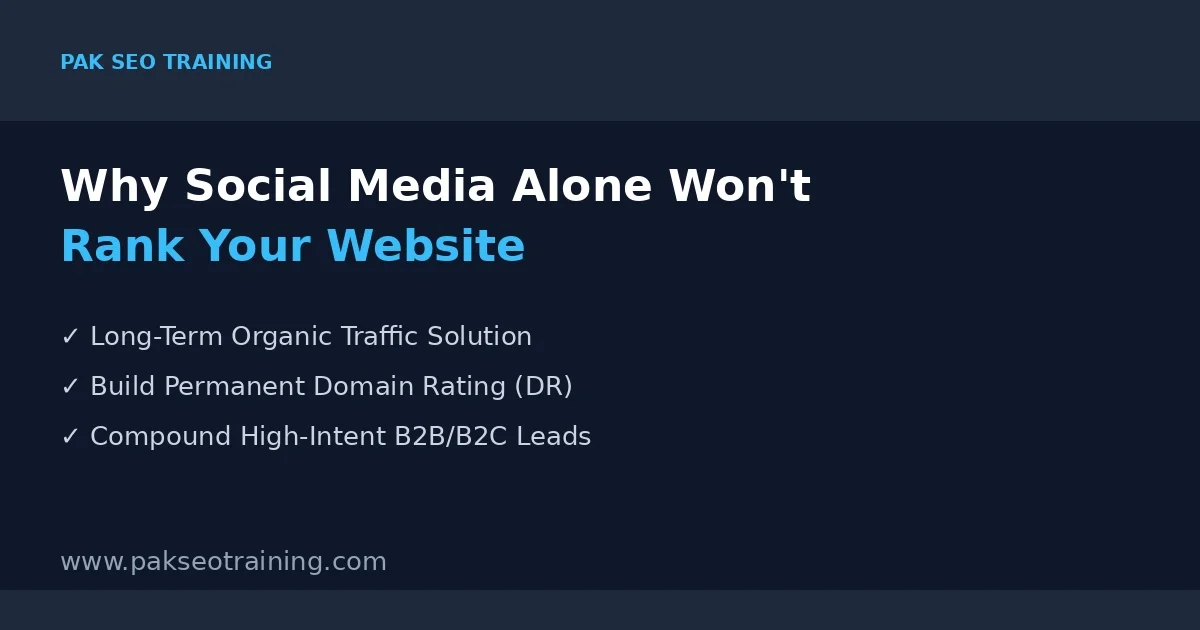
Building a website ranking without social media reliance requires established search engine optimization, technical authority, and content depth. While social channels drive temporary visibility, a structured website builds permanent domain rating, continuous organic traffic, and compounding lead generation.
Key Takeaways
- Social media platforms control algorithms and access, whereas owned websites provide permanent digital assets.
- Organic search delivers high-intent traffic actively searching for solutions rather than passive scrollers.
- Domain Rating (DR) grows through authoritative backlink acquisition, creating long-term search engine trust.
- Sustainable lead generation relies on searchable intent matching rather than short-lived social media engagement bursts.
Why Social Media Visibility Fails as a Long-Term Ranking Strategy
Many digital creators and business owners attempt to shortcut digital growth by relying entirely on social media presence, personal brand face value, or short-form video apps. However, social media platforms operate on rented land. Algorithms change overnight, visibility decays within hours, and platforms own the audience relationship.
Relying exclusively on social channels without an optimized website leaves businesses vulnerable to sudden traffic drops. A dedicated website acts as a permanent hub where content compounds over time, attracting search engine crawlers and delivering steady, predictable business value.
The Mechanics of Sustainable Organic Traffic
Search engine optimization targets active user intent rather than passive consumption. When users type specific queries into search engines, they look for immediate, authoritative answers.
- Intent Matching: Captures users at the exact moment of need.
- Compounding Returns: Published articles continue to rank and attract visitors months or years later without ongoing ad spend.
- Audience Ownership: Direct control over user data, conversions, and lead capture funnels.
Scaling Domain Rating (DR) and Backlink Authority
Domain Rating reflects a website's overall link popularity and authority within search engine ecosystems. Social media links are predominantly "nofollow" and do not pass PageRank or build traditional domain authority.
Building sustainable DR requires active link-building campaigns, digital PR, guest posting outreach, and comprehensive resource creation that other websites naturally want to reference. This structural authority creates a moat that social media popularity alone cannot replicate.
Converting Original Traffic Into Qualified B2B and B2C Leads
Traffic volume alone does not drive business revenue. Social media engagement often generates vanity metrics likes and shares rather than transactional intent.
By structuring content around commercial and informational intent keywords, websites attract qualified prospects who are closer to making a purchasing decision. Implementing strategic call-to-actions, clear service architecture, and optimized conversion pathways transforms organic visitors into consistent, high-value leads.
FAQ Section
Can a website rank successfully without any social media presence? Yes. While social media can accelerate brand awareness, search engines rank websites based on technical health, content relevance, on-page optimization, and authoritative backlink profiles.
How long does organic SEO take compared to social media marketing? Social media yields immediate but temporary visibility, whereas SEO requires several months to build momentum, but provides compounding, long-term traffic returns.
Does social media sharing improve website Domain Rating? Social media shares do not directly pass link equity or increase Domain Rating, though they can increase content visibility and attract natural editorial backlinks.
Why are leads from organic search higher quality than social media traffic? Organic search traffic originates from targeted user intent, meaning visitors actively search for specific solutions, resulting in higher conversion rates.
Conclusion
Social media provides temporary engagement, but an optimized website builds permanent digital assets. Prioritizing SEO infrastructure, domain authority, and organic reach ensures long-term business growth and consistent lead generation.
Leave a Reply